Research Opportunities

Use your lived experience to help shape research that could improve care for future patients 

Research Opportunities

People with lived experience of cancer have unique insights that can help shape the future of cancer research, care, and treatment. By connecting patients, families, and carers with cancer researchers, we’re making sure that research is guided by the people it matters most to.

Whether you’re sharing your experiences, giving feedback on research ideas, or helping to shape new studies, your voice can make a real difference. Together, we can ensure that future cancer care is more relevant, compassionate, and effective for everyone. Your experience is valuable, and by taking part, you can help improve outcomes for future generations.

Give as much or as little time as you like.

Scroll through the details below using the < > arrows for current research opportunities and how you can get involved.

Development and testing of a screening tool to identify need for support for people who have had a cancer diagnosis

Researchers: Dr Jane Frankland, Dr Nicola Andrews, Dr David Wright
Sponsor: University of Southampton (ethics/ERGO no: 110170)
Funder: Wessex Cancer Alliance

We are inviting individuals who have had a cancer diagnosis to participate in this short online survey as part of our work to develop a brief screening tool that can be used in clinical practice.  The aim of the screening tool is to rapidly and accurately tailor the care provided to the individual person with cancer. We have developed version one of the screening questions and need to test these to check they are working well.  We anticipate that it will take 10 to 15 minutes to complete the survey questions.  If you leave the questionnaire without completing it, your progress will be saved for up to 7 days, and you can automatically continue from your last question, if using the same device and browser. This feature works by placing a cookie on your browser that keeps track of your progress.

Please read the Participant Information Sheet, which provides further information:
Online questionnaire Participant Information Sheet _V1 2026.06.11.pdf

If you have any queries please contact the research team via email: perscare@soton.ac.uk

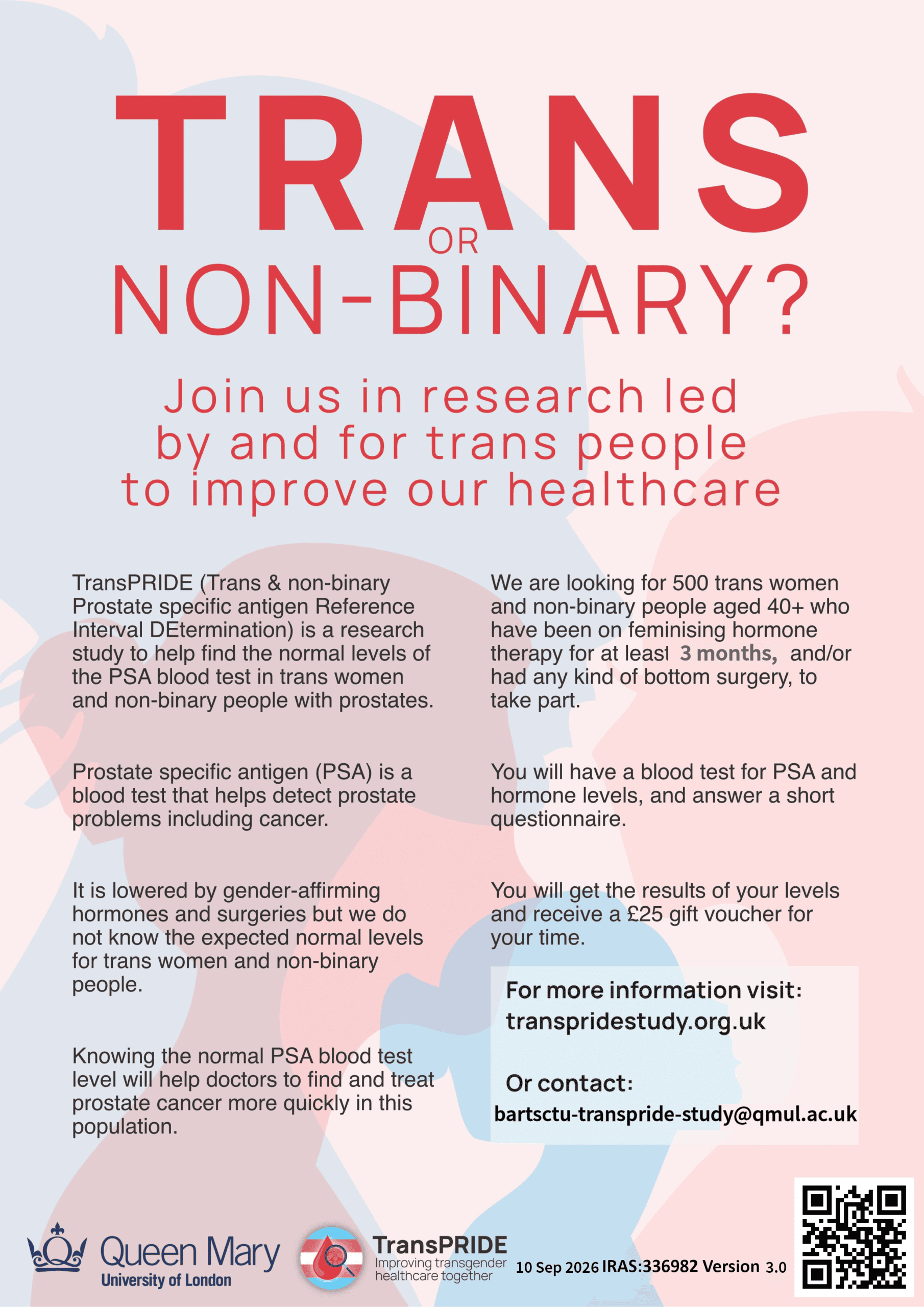
TransPRIDE Study

The UK Cancer and Transition Service (UCATS) are looking to recruit Trans Women into a new study.

TransPRIDE (Trans & non-binary Prostate specific antigen Reference Interval DEtermination) is a research study to help find the normal levels of the PSA blood test in trans women and non-binary people with prostates.  Prostate specific antigen (PSA) is a blood test that helps detect prostate problems including cancer.  It is lowered by gender-affirming hormones and surgeries but we do not know the expected normal levels for trans women and non-binary people.  Knowing the normal PSA blood test level will help doctors to find and treat prostate cancer more quickly in this population.  

We are looking for 500 trans women and non-binary people aged 40+ who have been on feminising hormone therapy for at least 3 months, and/or had any kind of bottom surgery, to take part.  You will have a blood test for PSA and hormone levels, and answer a short questionnaire.  You will get the results of your levels and receive £25 gift voucher for your time.

For more information visit transpridestudy.org.uk or contact bartsctu-transpride-study@qmul.ac.uk

UCATS provides specialist clinical advice and support for trans, non-binary, and gender diverse people affected by cancer, and their care teams. They also offer:

  • Specialist clinical advice on the integration of gender care and cancer care.
  • Multiprofessional MDT discussion.
  • Review of available evidence related to treatment decisions.
  • A platform for shared decision making.
  • Letter of recommendations.
  • Signposting to other important services such as therapy, psychosexual counselling and fertility preservation
  • The opportunity to participate in research.

 Further information can be found on their  website: www.chelwest.nhs.uk/ucats.

Protect-C

PROTECT-C is a research study offering genetic testing to people to see whether they have a genetic change that increases their risk of breast, ovary, bowel, and/or womb cancer. This is regardless of whether they or their families have had cancer.

The study is being coordinated by the Women’s Precision Prevention clinical research team from the Wolfson Institute of Population Health, Queen Mary University of London, and funded by Yorkshire Cancer Research.

 They are looking for 5000 people to take part in the PROTECT-C study. You may be eligible to take part if you:

  • Are over the age of 18 years and

  • Are a woman, trans man, or non-binary person with female reproductive organs (ovaries, fallopian tubes, and/or a uterus) and

  • Have never had genetic testing for the cancer genes tested for in the study and

  • Do not have first-degree family members (e.g. parent, sibling, child) or second-degree family members (e.g. aunt, uncle, niece, nephew, grandchild, grandparent, half-sibling) with genetic changes in the cancer genes tested for in the study.

More information on the cancer genes tested for in the PROTECT-C study is found in the Participant Information Sheet.

People who have undergone other types of genetic testing for non-cancer conditions or ancestry services (e.g. 23andme or ancestry.com) may still take part.

To find out more, visit their website at https://www.protect-c.co.uk/

Imperial College London

Participants with experience of taking Capecitabine needed for co-design workshops

Imperial College Clinical Research Fellow, Hyung Kyung Kim, would like to design a solution to help make it easier for patients to take capecitabine treatment as prescribed through a co-design workshop. The workshops will be online or in person.

Who can help: You are, or have been, on capecitabine (but not with radiotherapy at the same time) for colorectal cancer. They are particularly interested in those participants who have struggled with taking capecitabine as prescribed.

Workshops will last around 150 minutes and will either be online or in person.

All participants will receive £68.75 after the workshop, and if participating in an in-person workshop they will also be reimbursed for travel costs up to £15.

Please contact Hyun Kyung Kim on h.kim@imperial.ac.uk for further information


Could you help shape uterine leiomyosarcoma research?

A researcher from the University of Bradford is developing a pilot study into uterine leiomyosarcoma (womb sarcoma) and is looking for people with experience of this cancer to help shape the project.

The research aims to understand why some cancer cells can survive chemotherapy and contribute to relapse. If successful, it could lead to earlier diagnosis and new treatment approaches that target these persistent cells.

They are looking at setting up a Patient and Public Involvement (PPI) advisory panel to help guide the study and advise on how findings are shared.

If you, or someone you know, has experience of uterine leiomyosarcoma and would like to find out more, please contact J.Hargan@bradford.ac.uk, who can arrange an informal chat via Microsoft Teams, with no obligation to get involved.


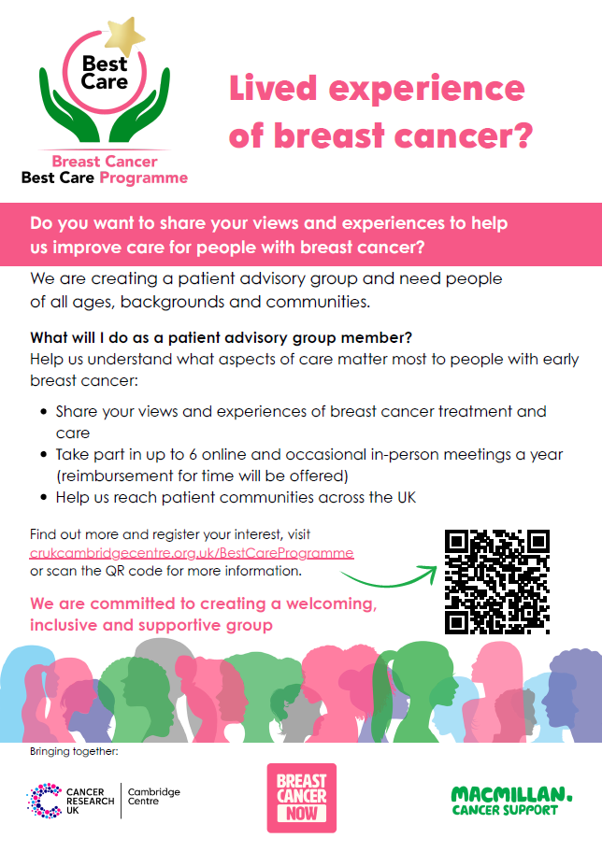
Breast Cancer Best Care Programme Survey

The Best Care Programme is a research project run by Cancer Research UK Cambridge Centre, that aims to improve the care for people with early best cancer.

 They are looking for people of all ages, backgrounds and communities with lived experience of breast cancer to join their patient advisory group. 

 Share your views and experiences of breast cancer treatment and care and help CRUK reach patient communities across the UK.

There will be up to 6 online and occasional in-person meetings a year and you will be offered reimbursement for your time.

To find out more or register your interest, contact https://crukcambridgecentre.org.uk/BestCareProgramme


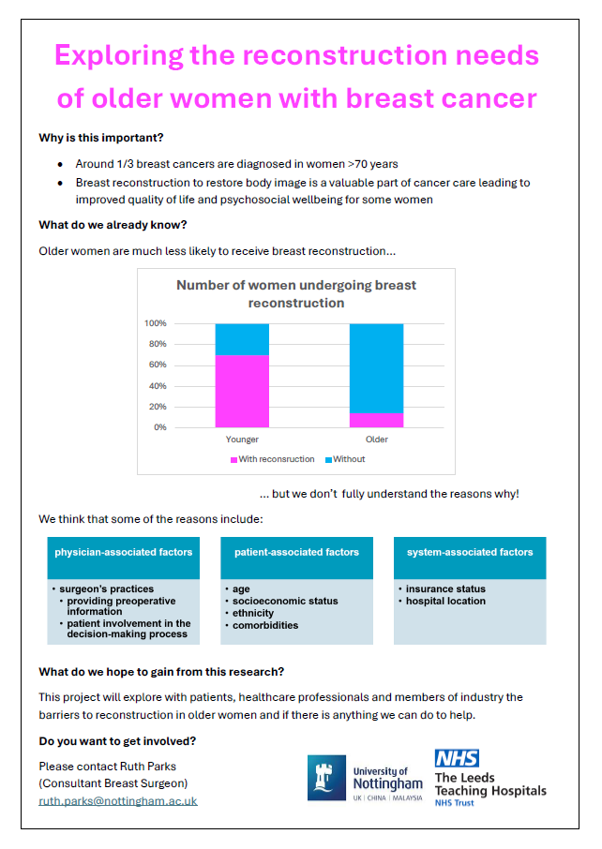
Exploring the Reconstruction Needs of Older Women with Breast Cancer

Breast cancer is the most common cancer in females worldwide.  The population of older women living with breast cancer is set to increase over time due to our aging population as well as improvements in treatments. Breast reconstruction improves patients’ quality of life. Despite this, the importance of breast reconstruction in older women is less well understood.
This study aims to explore the breast reconstruction needs of older women with breast cancer focusing on three main areas:
  1. patient factors – the reasons why an individual patient may or may not choose reconstruction
  2. healthcare professionals – the reasons why healthcare professionals may or may not promote reconstruction to their patients and the barriers to provision
  3. representatives from industry – targeting those who manufacture, sell or promote reconstruction products such as implants, to assess their thoughts on reconstruction in older women and potential barriers

To find out more or to take part, contact Ruth Parks at ruth.parks@nottingham.ac.uk


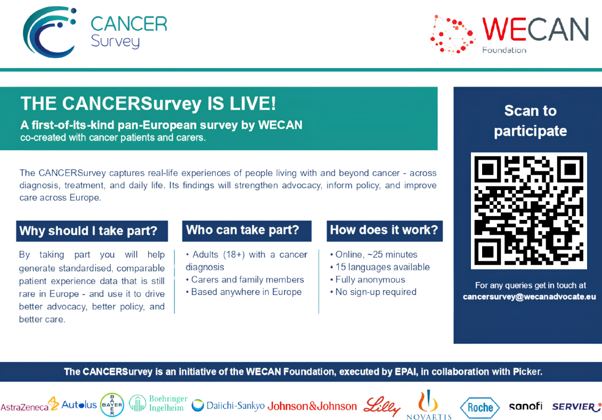
Cancer Survey

WECAN has launched the CANCERSurvey, an independent pan-European survey co-created with patients and carers. It captures real-life experiences of living with and beyond cancer, including diagnosis, treatment, care and daily life. The findings will provide important evidence to support patient advocacy and inform policy and cancer care across Europe.

If you have been diagnosed with cancer as an adult in Europe, or if you care for someone who has, your experience belongs in this dataset.

  • Online and takes around 25 minutes
  • Available in 15 languages
  • Fully anonymous
  • No sign-up required

Take part here: Complete the CANCERSurvey

The more people take part, the stronger and more representative our collective evidence becomes. Please also share this survey widely with patients, carers, colleagues, patient organisations, local groups, friends and anyone else who may be eligible to participate.

Can I hear your story?

Hi, I’m Summayah.

I’m trying to understand the real experiences of Ethnic Minority women living with metastatic breast cancer.

So many voices and lived experiences are missing — and I want to help change that.
Your story can help improve support and resources for women in our communities facing metastatic breast cancer. If you feel able to share even a small part of your journey it would mean so much.

Share as much or as little as you feel comfortable

Completely confidential

Online or Phone

To take part, email Summayah2.zafar@live.uwe.ac.uk or scan the QR code on the poster.

Everyone who takes part will have the option to receive a shopping voucher as a thank you.

NIHR, NHS Mid Yorks, University of Leeds – PPIE Group & Input needed around antibiotic pumps

What we want to know:

“Could antibiotic pumps provide the NHS with a safe, cheap and greener way for hospital patients to be given antibiotics”

Come along to our Patient and Public Involvement & Engagement (PPIE) focus group

Why get involved?

Missing or delayed antibiotics in hospital can increase the risk of an antibiotic not working.

With the NHS under increased pressure, we need to improve the way we give antibiotics. Antibiotic pumps may help reduce missed doses and improve patient and staff experience.

Who are we looking for?

Anyone who wants to share their views, ideas, experiences and who have received antibiotics in hospital via a drip or a pump at home. You don’t need any previous research experience.

What will I be doing

We are asking for 1 hour of your time to introduce our project and to get your ideas and thoughts about it. This could help to shape the project and research question. If we are successful with funding, there may be opportunity to be part of the PPIE committee longer term.

We will run a small focus group at Pinderfields Hospital, as part of this we will provide refreshments, parking and reimbursement for your time.

For more information or to express your interest contact: Joe Spencer-Jones at joseph.spencer-jones@nhs.net  or Stuart Bond at  07889 646305

Yorkshire Cancer Research – Call out for people living in coastal and rural communities

Yorkshire Cancer Research is currently working on a research project, exploring the experiences of people with cancer living in coastal and rural communities across Yorkshire. The findings will contribute to a new report looking at the challenges associated with living in these areas, including access to services and support.

We are looking to conduct 10–12 interviews over the summer with people who have lived experience of cancer from across Yorkshire. Our primary focus is on people living in coastal and rural communities, but we are also hoping to speak with a small number of people from urban areas to help us understand how experiences differ across the region. Please email policy@ycr.org.uk for further information.

NEW: Experience and Involvement Advisory Board

Could your experience help improve NHS services?

NHS West Yorkshire ICB is looking for people to join its new Experience and Involvement Advisory Board – a group that will help ensure the voices of patients, carers, families and communities are at the heart of decisions about health and care.

We’re looking for people from all backgrounds and communities, especially those whose voices are not always heard. You don’t need to be an expert in the NHS – your lived experience and passion for improving services are what matter most.

As a member of the Advisory Board, you’ll:

·       Help influence how people are involved in shaping health and care services.

·       Share your experiences and perspectives alongside people from voluntary organisations, Healthwatch, local authorities and NHS organisations.

·       Ask questions, provide constructive challenge and help make sure local people’s views are listened to.

·       Support NHS West Yorkshire to improve services and reduce health inequalities.

The Board meets every two months, with additional development sessions where needed. Members will receive information, guidance and tailored support to help them take part confidently and meaningfully.

If you care about improving health and care services for your community, we’d love to hear from you.

Interested?
We will be running a taster session online on Tuesday 4 August 2026 1:00pm – 3:00pm. At this session we will be running through the purpose of the advisory board, how it has been developed, and have the opportunity for members to try out some of the things the group will be doing.

The first official meeting will be in September

Use this link to register your interest in joining the West Yorkshire Experience and Involvement Advisory Board. Or email wyicb.wycommsand.involvement@nhs.net for more information

Together, we can help make sure health and care services in West Yorkshire are designed with people, not just for people.

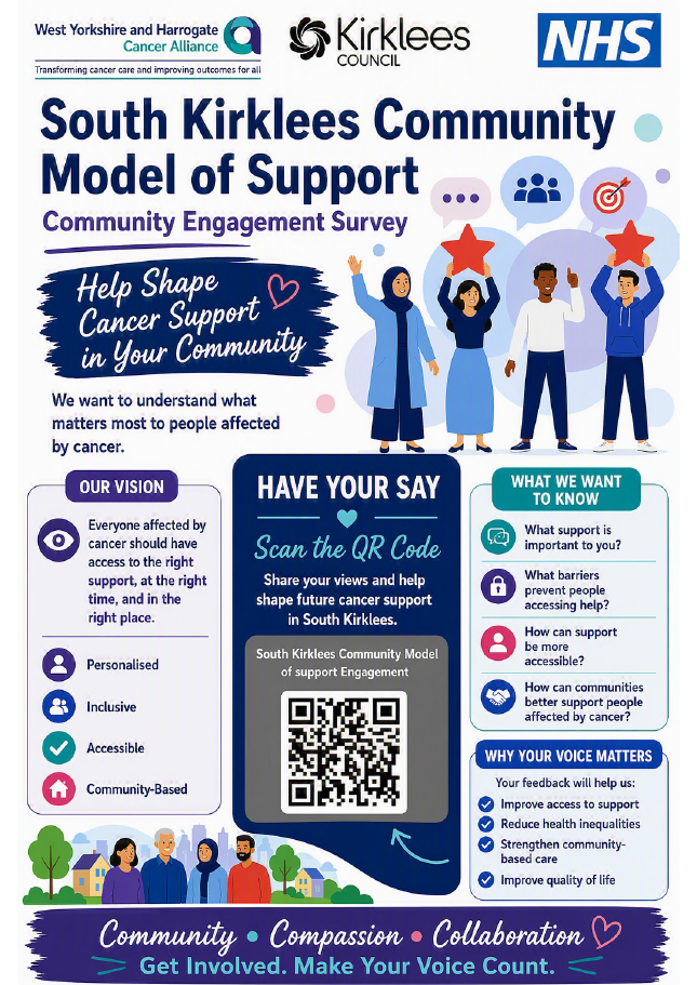
South Kirklees Community Model of Support

Could you help shape cancer support in your community?

Everyone affected by cancer should have access to the right support, at the right time, and in the right place.

Have you been affected by cancer?  West Yorkshire & Harrogate Cancer Alliance and Kirklees Council have created this opportunity for you to have your say about what matters to you.

They want to know:-

  • what support is important to you?
  • what barriers prevent people from accessing help?
  • how can support be more accessible?
  • how can communities better support people affected by cancer?

By taking part in the survey you can help them:-

  • improve access to support
  • reduce health inequalities
  • strengthen community-based care
  • improve quality of life

Share your views and help shape future cancer support in South Kirklees.

To take the survey, scan the QR code on the poster or click the button below.

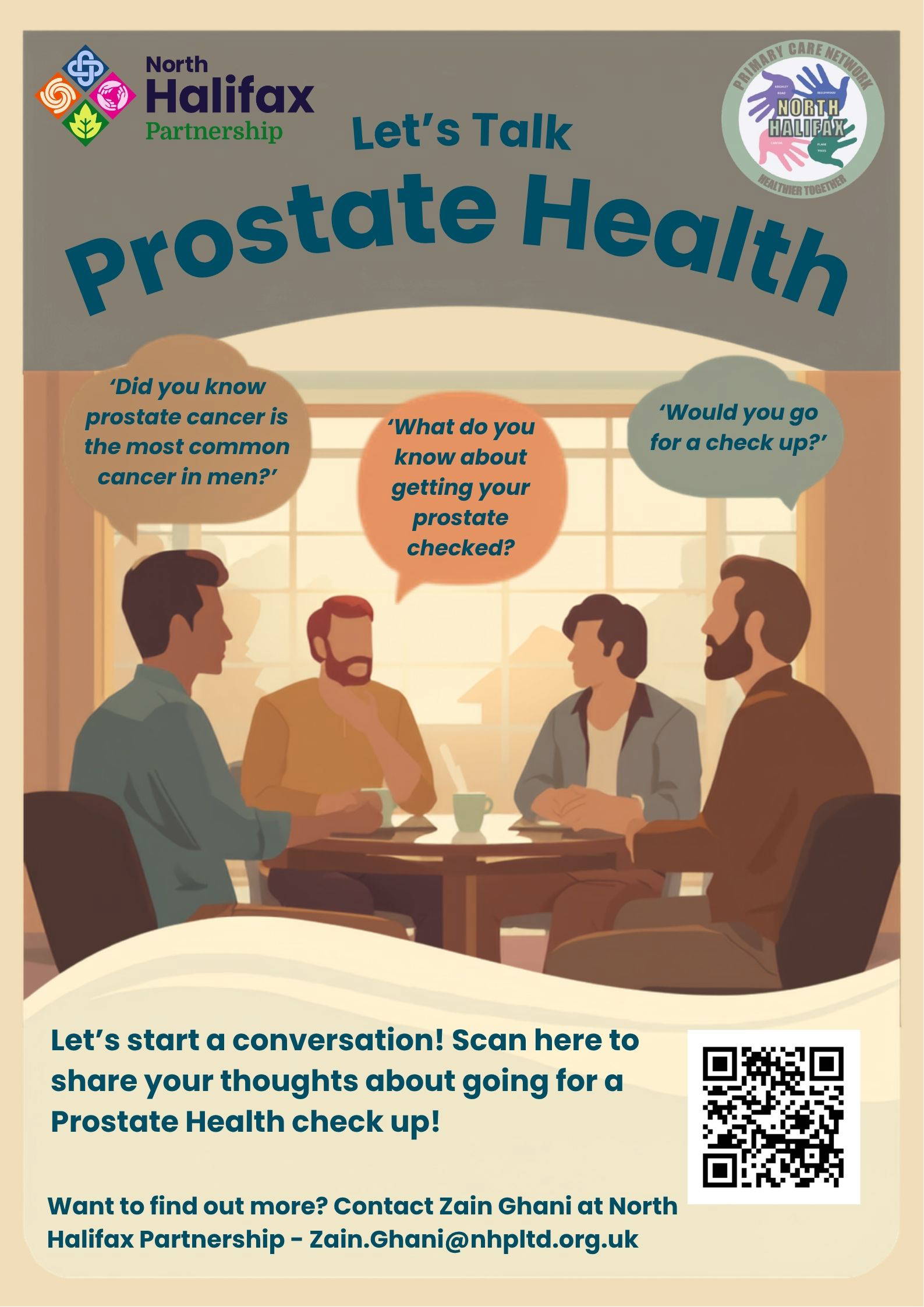
Prostate Health Survey

North Halifax Partnership and North Halifax Primary Care Network are asking local men to share their views and experiences of prostate health check-ups.

The anonymous survey aims to understand what encourages men to get checked and any barriers or misconceptions that may prevent them from doing so.

They are particularly keen to hear from Black men aged 45+, but welcome responses from men of all ages and backgrounds.

If you live in North Halifax, please take a few minutes to share your views and help inform future local engagement around prostate health.

For more information, contact Zain Ghani at North Halifax Partnership on zain.ghani@nhpltd.org.uk or click the button below to go to the survey.

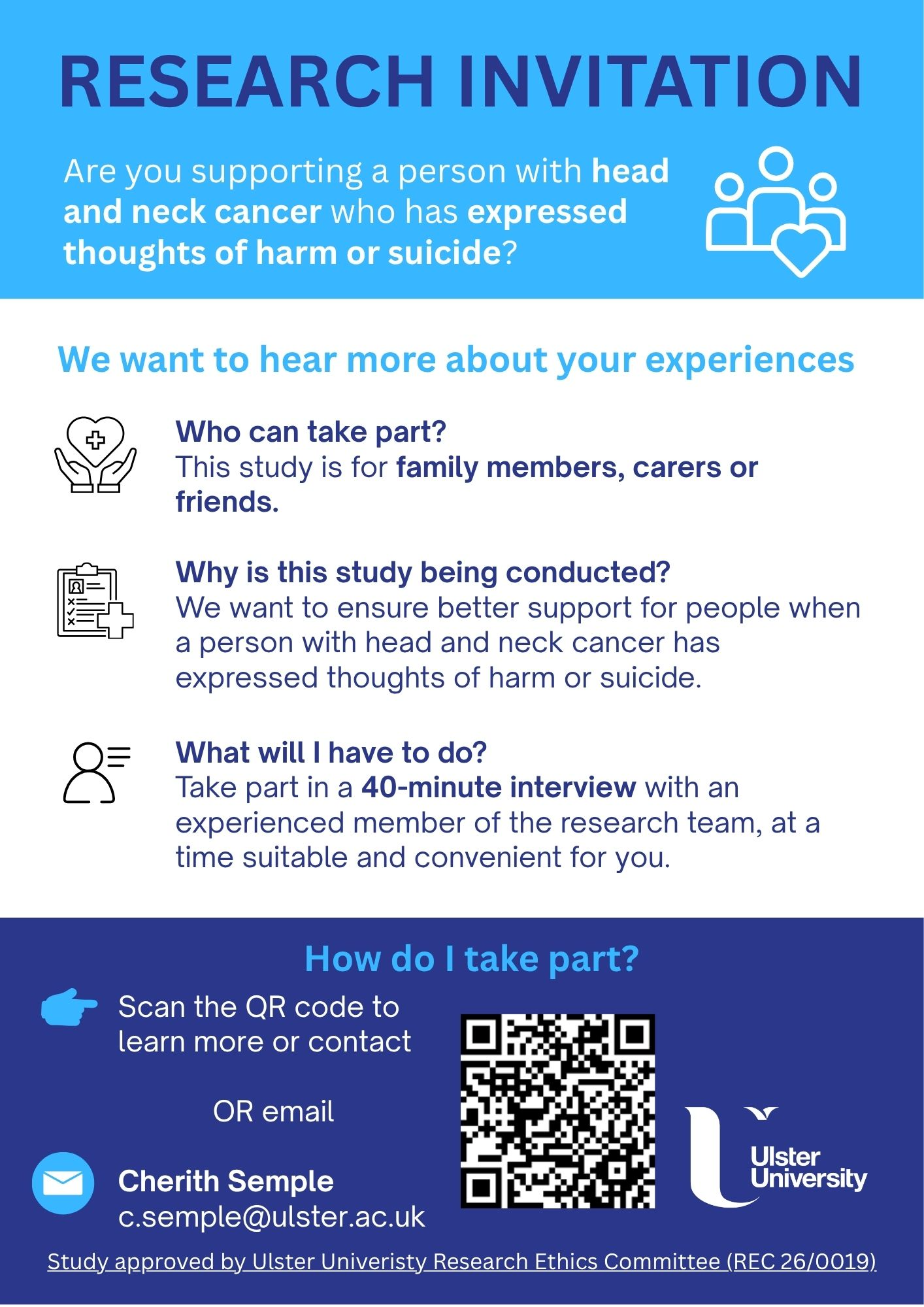
Are you supporting a person with head and neck cancer?

Research Study: Family, Friends, and Carers’ Experiences of Suicide Ideation in People with Head and Neck Cancer (REC 26/0019)

 Ulster University is conducting a research study exploring the experiences of family members, close friends and carers when a person with head and neck cancer experiences thoughts of self-harm, feels that life is not worth living, or has more active thoughts of suicide.

For more information or to provide consent to participate, please visit the study link below or contact Cherith Semple at c.semple@ulster.ac.uk


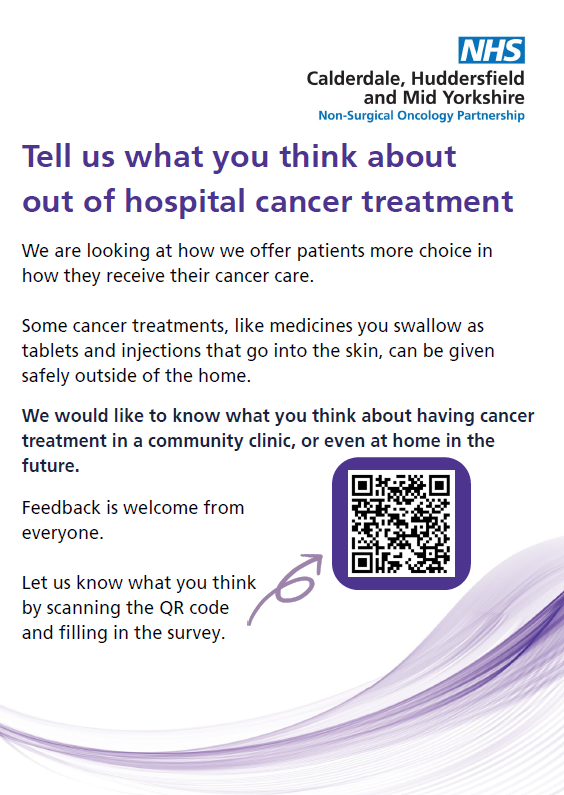
Out of Hospital Cancer Treatment Survey

NHS Calderdale, Huddersfield, and Mid Yorkshire Non-Oncology Partnership

Tell us what you think about out of hospital cancer treatment We would like to know what you think about having cancer treatment in a community clinic, or even at home in the future. We are looking at how we offer patients more choice in how they receive their cancer care. Some cancer treatments, like medicines you swallow as tablets and injections that go into the skin, can be given safely outside of the home. Feedback is welcome from everyone. Let us know what you think by either following the link below, or scanning the QR code on the flyer.

Join Patient VIEW

Patient VIEW is dedicated to representing the voices of patients, carers, and service users, ensuring they are central to decision-making processes in cancer care.

Become a Cancer SMART Champion

Catching cancers at an earlier stage, greatly improves the chances of survival.  Could you be a champion helping to spread our Cancer SMART message?

Become a fundraiser

As a small charity, we know how important it is to make the most out of every penny we receive.  Could you help us raise funds to continue our vital work?