
Supporting Carers

Am I a carer?
When someone is diagnosed with cancer, it can have a huge affect on the people around them. They may need lots of support in many ways. They might need practical help such as with daily tasks like cooking meals or help with bathing and dressing. They might need emotional support, or someone to talk to other people on their behalf such as health and social care professionals, or help getting to medical appointments. If you’re supporting someone you’re close to, such as a partner, family member, friend or neighbour, you might not think of yourself as a carer, but if you’re providing unpaid help and support to someone affected by cancer who couldn’t manage without your help, then you are a carer. Understanding your caring role is important, as it may mean you are entitled to support yourself.
Supporting carers
As a carer, it’s important to remember that you matter too. You may be so focused on helping someone else that you forget to look after yourself. Caring for someone with cancer can take an emotional toll on your own wellbeing.
We have produced this page to recognise the wonderful job that unpaid carers are doing, and to be a useful resource to help you get the help and support you need and deserve.
Supporting Carers
Caring for someone with cancer can make a big impact on your life, and it can take time for you to adjust to the changes. You may have to balance caring with other responsibilities such as work and other relationships. As a carer you may also need financial support, or more practical help.
Information for Carers
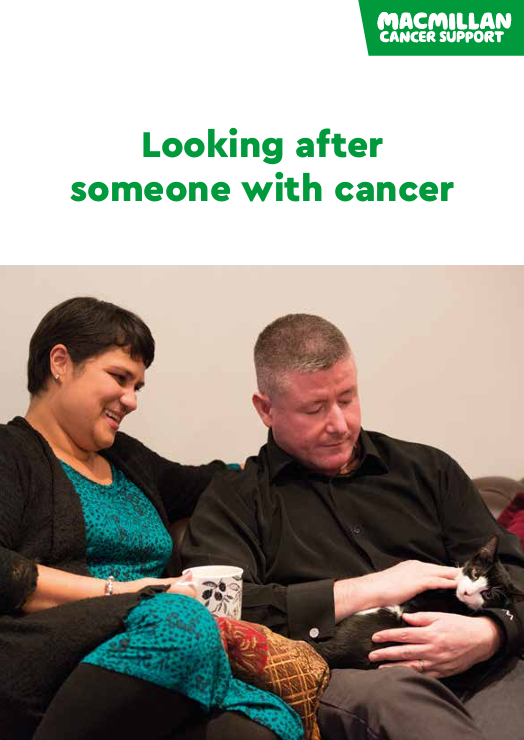
If you’re caring for someone who has cancer, Macmillan have created a fantastic resource – looking after someone with cancer. This has lots of sections offering help and advice, including: –
Who can help look after you and the person you’re looking after
- Support from health and social care professionals
- Planning and organising care
- Help from adult social care
- Help from family or friends
Caring at home
- Equipment and changes to the home
- Managing everyday needs
- Medication planner
- Managing symptoms and side effects
Other care options
- Taking a break from caring (respite)
- Residential and nursing homes
- Hospice care
Making decisions and legal issues
- Planning ahead
- Making difficult decisions
Work and money
- Working while caring
- Working after caring
- Benefits and financial support
Emotional effects of caring
- Your feelings and talking about your feelings
- Looking after yourself
Relationships
- You and the person you look after
- Your relationship with others
- Other support
End of life and bereavement
- Caring for someone at the end of life
Further information and resources
- About our information
- Other ways we can help you
- Other useful organisations
- Your notes and questions

Coping with being a carer
Every carers situation is different. You may be the main care-giver, or sharing the responsibity with others. The person you’re caring for will also have different demands than others, and the care they need from you may change as their cancer journey progresses. It can be emotionally and physically difficult, and you may feel you need someone to talk to but don’t want to burden your friends and family. It can be a real comfort to speak to others who have experience of caring for someone with cancer. Please see below some support groups specifically for carers HERE.
How to support someone with cancer
When a loved one receives a cancer diagnosis, you will want to offer support, but it can be very difficult to know what to say and do to help. Here we discuss ways you can offer support, but it’s important to only offer what you can actually give.
Practical Support
Check in with your friend or loved one and ask them what they need. They may wish to remain as independent as possible, but if they don’t need help now, they may need help in the future so keep the offer open.
Practical ways you can help: –
- Make meals they can put in the freezer
- Housework, gardening, laundry
- Take them to appointments
- Help look after children or pets
- Spend time with them
- Check in regularly by phone
Emotional Support
For someone with cancer, having emotional support from loved ones can make a big difference to their quality of life. People are often afraid of saying the wrong thing, but just be open, honest and show your concern and you won’t go far wrong. Ways to emotionally support someone: –
- Give them a friendly hand squeeze or hug
- Tell them you’re thinking about them, either by phone, text or card
- Be available to listen
- You don’t always need to make the person you’re visiting feel better. Sometimes sitting in silence is enough
- Share a joke or laugh with them if appropriate
- Be as normal as possible, and don’t just talk about cancer (but also don’t avoid the subject if they want to talk about it)
- Respect their need for privacy (eg check before visiting)
- Offer support throughout the whole cancer journey, not just at the diagnosis stage
Humber and North Yorkshire Health and Care Partnership have created a wonderful resource – Supporting someone you know through cancer. You can read it HERE.


Taking care of yourself
As a carer, you may be used to putting someone else’s needs before your own. But it’s important that you look after yourself too. Remember, you cannot pour from an empty cup!
Manage emotional stain and guilt – you may feel lonely, angry, guilty or resentful. These feeling are normal and don’t make you a bad carer. Don’t try to do everything in a day, allow yourself time for you – reading, going for a walk, dancing to music in your kitchen or taking a relaxing bath.

Protect your physical health – make sure you eat regular, balanced meals and sleep as much as possible, as exhaustion makes stress harder to manage. Pace yourself, breaking large tasks into smaller, more manageable parts and focus on one thing at a time so that you don’t get overwhelmed. Make sure you keep your own doctor’s appointments, dental visits and prescriptions up to date. Don’t miss appointments because you’re too busy managing someone else’s.
Accept offers of help – don’t try to do everything yourself. Ask for help when you need it and accept offers of help back. People often give open offers of help – ‘if there’s anything you need’. Give them specific tasks to do, like picking up some shopping, cooking a meal or sitting with your loved one for an hour to give you time off. You could look into respite care to give you a longer break or holiday – your local council will be able to give you a Carer’s Assessment to see what support you qualify for. If you work, you may wish to speak to your employer’s HR department about your situation and discuss flexible working options or carer’s leave.
Connect with other carers – joining a support group speaking with other carers can help feelings of isolation and loneliness. We have several support groups listed further down this page HERE. You could also speak to your GP about local councelling or talking therapies. Support organisations and charities often have helplines and online forums too. See our charities list HERE.
Financial Support
Being a carer for someone with cancer can affect your ability to work. However, there may be grants, benefits and other financial support available to help you.
Here’s some benefits which you may be entitled to: –
Universal Credit – a means-tested benefit for people of working age who are on a low income. You can get this payment whether you are working, out of work or are unable to work. It can include amounts for housing, the costs of raising children, disability, or being a carer and which of these you will get depends on your circumstances.
Carer’s Allowance – money for people who spend at least 35 hours a week providing regular care to someone who receives a qualifying disability benefit. You don’t have to be related to or live with the person you care for to get Carer’s Allowance, but eligibility criteria apply.
Carer’s Credits – these protect your state pension by keeping up your National Insurance payments, even if you can’t work because of your caring role. Normally, you build up your National Insurance contributions by working and paying them through your wages.
Pension Credit – this is a mean-tested benefit for people on a low income who have reached pension age to bring their income up to a minimum amount. It has two parts: –
- Guarantee Pension Credit – tops up your weekly income if you have a low income.
- Savings Pension Credit – an extra payment to reward people who have prepared for retirement by having some savings or income.
You can claim Pension Credit whether or not you are still working. You do not need to have paid any national insurance contributions.
Everyone’s personal circumstances are different. To find out what benefits you may be entitled to, use the Turn 2 Us Benefits Calculator HERE.

Grants
There are registered charities in the UK that give grants to people in need. You may qualify for a grant based on your circumstances. Turn 2 Us have a grants search that can help you find grants to apply for. Click HERE to find out more.
Help from your Local Coucil
If you are caring for someone, help may be available to you from your local council specifically to meet your needs as a carer. All carers have the right to an assessment of their needs, although what sort of assessment, who does it and your associated rights to support depend on the type of carer you are and who you’re caring for. You may have a Carer’s Assessment carried out by the local council’s social services or by their children’s and family services department if you’re a young carer or are caring for a child.

Help for Young Carers
If you are under the age of 18 and spend time looking after someone who is ill, you are a young carer. Being a young carer can bring it’s own challenges. You may worry how it is affecting your school, college or university work, employment, free time and relationships.
Education & Work
If you’re in school or at college, you can speak to a teacher or staff member about your caring role. They may be able to help you with extra time for schoolwork or homework assignments for instance, or be more understanding if you are late or need to use your phone during breaks. The NHS has more information about help for young carers
You may be in further education or looking to apply to university or college. You can find out more about this from The Children’s Society
If you are working while caring for someone with cancer, Macmillan have information about your rights and how to talk to your employer – Working while caring for someone.

Friends and Relationships
As a carer you might not have as much free time as your friends for socialising or taking part in activities. It’s important that you make time for yourself, so seek help from others to give you time to spend with your friends. Your local young carers project or carers centre may be able to help. See the list below for support local to you.
- Kirklees: Kirklees Young Carers with Barnardo’s offers 1:1 and group support, assessments, and guidance. Phone: 01484 426100 or email kirkleesyoungcarers@barnardos.org.uk.
- Leeds: Leeds Young Carers – Family Action provides specialist support, assessments, and the We Are Young Carer Friendly Leeds schools programme. Phone: 0113 7339126 or email: leedsyoungcarers@family-action.org.uk
- Bradford, Harrogate, Selby & Craven: Carers’ Resource Young Carers runs youth clubs, holiday trips, mentoring, and one-to-one support. Phone: 01274 449660.
- Calderdale: Calderdale Young Carers Service coordinates local support for young people managing care roles. Phone: 0800 3895785 or email: calderdaleyoungcarers@calderdale.gov.uk.
- Wakefield: Wakefield Families Together handles young carer assessments and family support. Visit their website to find out how to refer.
Meet Other Young Carers
Meeting up with other young carers to have fun, make new friends and share some of your worries can really help. Many young carers groups offer evening clubs, days out or even holidays, as well as being a great source of information. The Children’s Society has lots of information on local groups, and even hosts an annual Young Carers Festival (costs apply).
Need to talk?
Sidekick by Action for Children is a text message and email support service for young carers. You can ask them anything in total confidence and they will never judge you. You can talk through your problems, whether it’s school related, bullying, family or friendship worries, mental health and wellbeing, and help you find extra support if you need it. Contact them by text on 07888 868 059 or email: help@sidekick.actionforchildren.org.uk or visit their website.
Further resources and information
Click on the icons below to visit their websites for information and support for carers.



Charities and Support Organisations for Carers
Charities and support organisations are a great resource to help support you or your loved ones. They can offer information and support in a variety of ways, practical, physical, and emotional. Please see below some charities and other organisations that offer help specifically to carers.

Carers UK
We give carers expert advice, information and support. We’re here to make sure that no matter how complicated your query or your experience, you don’t have to care alone. Telephone: 020 7378 4999 Email:info@carersuk.org Website: https://www.carersuk.org/home Address:...

Carers Trust Mid Yorkshire
No one cares more about care than Carers Trust Mid Yorkshire. We take a person centred approach to carers and their loved ones ensuring that their unique needs and preferences are prioritised. This approach fosters a supportive environment and empowers carers to lead...

Carers Trust
Caring is what holds families and communities together. It can be rewarding, but it can also come at a high cost. We believe every carer should find the right support, close to home. We provide practical, emotional and financial support through our local services...

Carers First
We understand that life as a carer can be challenging. Getting the help and support you need shouldn't be. Carers First works directly with, and for carers, providing personalised information and tailored support in the way that suits them, helping them find balance,...
Turn 2 Us
Turn2us is a national charity providing practical help to people who are struggling financially. If you are a carer for someone who has an illness or disability, there may be benefits, grants or other financial support available to you. Our Turn2Us Benefits Calculator...

The Prince of Wales Hospice
When someone you love is living with a life-limiting illness, knowing where to turn can feel overwhelming. We are here to support you and your family every step of the way. We offer specialist palliative care, wellbeing support, and practical help, either as a...

Wakefield Hospice
Wakefield Hospice is committed to providing the highest level of symptom management and care for people who have advanced active, progressive and life threatening illness. We offer a variety of services including: - In patients Friday Wellbeing Sessions Bereavement...

The Ruth Strauss Foundation
In early 2018, Ruth Strauss, the late wife of Sir Andrew Strauss, the former England cricket captain, was diagnosed with an incurable lung cancer that affects non-smokers. Ruth died on 29 December 2018; she was 46 years old and mother to two children, then aged 10 and...
Find a Support Group for Carers
It can be a real comfort to speak to others who have experience of caring for someone with cancer. Please see below some support groups specifically for carers.

Barnsley Carers & Loved Ones Cancer Support Group
Our group is a welcoming social and peer support space for carers, loved ones, relatives and friends of those living with cancer, or affected by cancer. The group is also open to those who have sadly lost someone to cancer, offering a safe space to talk, connect with others who understand, and access support.
📍 Our monthly meeting locations:
• 1st Tuesday (6PM) – BHF Priory Centre, Lundwood, S71 5PN
• 2nd Monday (2PM) – St John’s Community Centre, Penistone, S36 6AR
• 3rd Tuesday (2PM) – BHF Priory Centre, Lundwood, S71 5PN
The group is free to attend and refreshments are provided.
For more information please contact Amy on 07380 863049.
💬 Stay connected:
Facebook page: https://www.facebook.com/profile.php?id=61558515519791
Private group: https://www.facebook.com/groups/341960962210517

Carers Leeds Support Group (Horsforth)
This group meets on the first Tuesday of the month from 1 – 2.30 pm for a chat and cuppa at Grove Methodist Church, Town Street Horsforth, Leeds LS18 4RJ.
Carers Leeds – Support After Loss
Carers Leeds provide support for carers who have been bereaved including running a Support After Loss group to build up confidence and offer opportunities to socialise.

Carers Wakefield – The Ladies Group
The Ladies Group meet on the Last Tuesday of the month 10am-12pm at our office on 25 King Street, Wakefield, WF1 2SR.
This group supports ladies who care for a friend or relative. The ladies meet for a coffee and a chat and occasional talks and meals out are arranged.
Carers Wakefield – The Men’s Group
A chance for male carers to meet and socialise.
Carers Wakefield – Wakefield Carers Group
The Wakefield Carers Group is held on the last Thursday of each month 10.30am-12pm at New Wells Housing Complex, Thornhill Street, Wakefield, WF1 1NJ.
It’s a mixed group of carers that meet for a cuppa, a chat and share and gather information. Speakers from various services are arranged on a regular basis.
Mid Yorkshire Carer’s Support Group
This group meet on the third Tuesday of every month from 1 – 2.30pm at The Rosewood Centre, Dewsbury Hospital, WF13 4HS.
To find out more information, contact Macmillan on 01924 512204 or email midyorks.macmillan.infocentre@nhs.net.
The Prince of Wales Hospice
Caring for someone with a serious illness or life-limiting condition can be physically and emotionally demanding. We’re here to support you with information, wellbeing services and guidance so you don’t have to do this alone.
Support available for families and carers: –
- Wellbeing support — Practical help and emotional support to maintain your wellbeing
- Community and group support — Groups and activities where you can share experiences and find connection
- Counselling and bereavement — One-to-one listening, counselling sessions and bereavement support
To find out more, visit their website HERE or call their wellbeing team on 01977 781451 or email wellbeing.team@nhs.net
Other useful information
Wellbeing Information
Our wellbeing page has information on how to look after yourself mentally and physically. It’s full of practical tips, resources and support information to help you live well with cancer.
How to reduce your risk of cancer
Cancer will affect 1 in 2 of us in our lifetime, but nearly half of these cancers could be prevented. Discover practical steps to help you reduce your risk.
Information and support for cancer types
We have individual pages for many of the common types of cancer. Each page has cancer-specific information, support groups, life stories, risk factors and much more.