The LGBTQ+ Community and Cancer

What barriers do the LGBTQ+ community face in terms of cancer care?
Research shows that if you’re LGBTQ+ you may experience inequalities to the cancer care you receive, including access to screening, diagnosis, clinical care, communications and overall experience on your cancer journey which can lead to worse outcomes.
According to research, you are more likely to be diagnosed with cancer at a later stage and have lower screening attendance rates. Fear of prejudice, gender-normative clinic environments or previous discrimination or mistreatment may cause you to delay seeking help or advice from medical professionals.
We’re helping to raise awareness of this as everyone should be entitled to equal care
We have produced this page to help raise awareness of the barriers faced by the LGBTQ+ community when it comes to cancer care, and to be a useful resource to help you get the help you need and deserve.
Cancer Screening Programmes
The cancer screening programmes save lives by detecting cancer early, before symptoms develop. In some cases they prevent cancer by detecting abnormal changes before they develop into cancer. Catching cancer early, when it is small and less likely to have grown or spread to other parts of the body, means treatment is more likely to be successful. The current screening programmes in the UK are for bowel screening (FIT test), breast screening (mammogram), cervical screening (smear test), and lung cancer screening which is currently being rolled out and is expected to be complete by 2030.

Cancer screening if you are transgender or non-binary
Cancer screening should be available to everyone who is eligible. If you’re a member of the LGBTQ+ community, there may be extra things to consider.
How your sex / gender is registered with your GP – most invitations for screening are automatically generated based on the sex / gender listed in your medical records. For instance, if you are listed as female, you will automatically be invited for breast screening from the age of 50 to 70, and cervical screening from the age of 25 to 64. However, if you are transgender or non-binary, it may mean you aren’t automatically invited for screening that you’re eligible for, or you might receive screening invitations for screening that you are not eligible for. If you haven’t received an invitation because you are listed as male on your records, you can “opt in” by contacting your screening provider. If you are listed as female but don’t have a cervix, you can ask your screening provider to take you off the invitation list.
Effects of hormones or gender realignment surgery
- Cervical screening
If you have had a full hysterectomy and no longer have a cervix, you no longer need to go for cervical screening. However, if you still have a cervix you should continue to go. Long-term use of testosterone can cause vaginal or cervical thinning (atrophy) which may make the smear test more uncomfortable. You can use vaginal oestrogen cream for a few weeks before the test to ease discomfort, or speak to the nurse at your test as they can use a smaller speculum and use a water-based lubricant to make the test more comfortable. You can also take someone with you for support. See our cervical cancer page for more information on cervical screening here.
- Breast screening
If you have been using feminising hormones and have grown breast tissue as a result, you are eligible to go for breast screening. If you have had top surgery where most of your breast tissue has been removed, breast screening will no longer be necessary (or possible). However, you should still check your chest, armpits, collarbones and nipples regularly for changes. See our breast cancer page for more information on breast screening and how to check yourself here.
Going for your screening appointment
Research has shown that people who are transgender or non-binary can face barriers when it comes to attending screening appointments. It could be concerns regarding a gendered waiting room, or worry that your gender registered at birth will be disclosed. There are things you can do to make the experience more comfortable.
- You could contact the clinic beforehand to discuss the waiting room. You may be able to time your visit to when there are people of all genders in the waiting room.
- You could time your appointment to quieter times, such as the first or last appointment of the day.
- You could take a friend for support
- You could ask your GP or gender identity clinic about clincs who specialise in health services specifically for transgender or non-binary people, such as the Leeds Trans & Non Binary Sexual Health Clinic held at Yorkshire MESMAC, in Leeds city centre. Call Leeds MESMAC on 0113 244 4209 or email leeds@mesmac.co.uk to book an appointment. You can visit their website at https://mesmac.co.uk/areas/leeds
New ‘at home’ screening kits
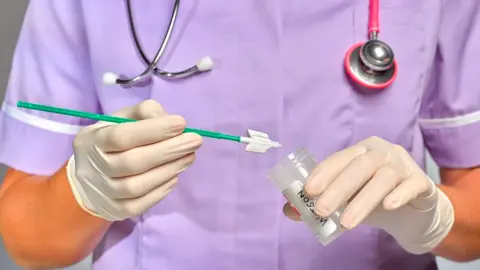
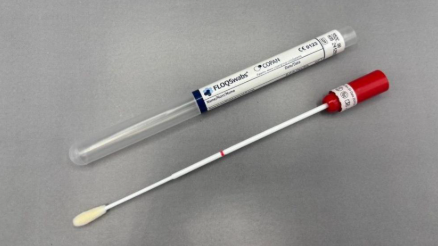
Due to low cervical screening uptake, the NHS have introduced screening kits that you can do yourself in the comfort of your own home.
Initially these tests will be available to people who have previously not attended their cervical screening appointments when invited. They are only available if you are invited to take part, and aren’t available on request. If you are eligible, you will be invited by the NHS to order an HPV self-test kit online. Your invitation could come through the NHS App, in a text message (SMS), an email or a letter. The kit contains a cotton-bud-style vaginal swab, simple instructions, and a pre-paid return envelope. You take a swab of your vagina yourself, and put it in the container provided. You then post it back in the envelope provided, free of charge.
HPV Vaccination
Research has shown that HPV (human papillomavirus) causes nearly all cervical cancer cases. However, if you don’t have a cervix and only have sex with men, it’s still important to have the HPV vaccine if eligible, as men who have sex with men are more likely to catch HPV, and HPV causes other cancers too, including 90% of anal cancers, 63% of penile cancers and 70% of oropharyngeal cancers (head and neck / throat cancers). HPV also causes 69% of vulval cancer, 75% of vaginal cancer and genital warts.
The vaccine is available to children aged 12-13, young adults aged 24 and under who missed getting vaccinated as a child, and men who have sex with men aged 45 and under (including people who are felt to have the same risk as men who have sex with men). The vaccine is also available to people at increased risk of HPV such as sex workers or people with HIV.

Prostate cancer
Prostate cancer is one of the most common cancers in the UK, with 1 in 8 people with a prostate developing the disease in their lifetime. If you’re Black, or of Black descent, the risk is double. Prostate cancer has no symptoms in the early stages, so if you have a prostate, it’s important to know the risk factors for prostate cancer.
- Age – If you’re over 50 (over 45 if you’re Black)
- Family history – If you have close relatives who have had prostate cancer or breast cancer
- Ethnicity – If you’re Black or of Black heritage, your risk of prostate cancer is doubled to 1 in 4
You may be worried about speaking to your GP or health professional about prostate cancer, especially if you identify as female or non-binary. If you have had gender-affirming surgery such as vaginoplasty, the prostate is not removed. Nowadays, the test for prostate cancer is a blood test to check the PSA (prostate-specific antigen) levels, or MRI. You no longer need a DRE (digital rectal exam), and if this is suggested you can refuse. You can also take a friend or family member with you for support.
You can find out more about prostate cancer here.
Testicular cancer
Testicular cancer commonly affects people with testicles aged between 15 and 49. It’s important to check your testicles regularly to know what is normal for you, so that you can notice any changes to the look, shape or feel of them quickly. However, this can be challenging if you suffer from gender dysphoria (a feeling of distress or discomfort when your gender identity doesn’t match that which you were registered at birth). You can speak to your GP or sexual health clinic, gender identity clinic or sexual health and wellbeing service for help and advice.
For more information on testicular cancer, including how to self-check, visit our website here.

Further resources and information






Charities and Support Organisations for the LGBTQ+ Community
Charities and support organisations are a great resource to help support you or your loved ones. They can offer information and support in a variety of ways, practical, physical, and emotional. Please see below some charities and other organisations that offer help specifically to the LGBTQ+ Community.

out together
Out Together is a Yorkshire-based LGBTQ+ charity working to reduce isolation, improve wellbeing and build stronger, more connected communities. We support LGBTQ+ people who may feel disconnected, excluded or left behind, particularly those facing barriers to social...
OUTpatients
OUTpatients is the UK’s only LGBTIQ+ cancer charity. We’re proudly led by and for LGBTIQ+ people affected by cancer, and work hard to support and advocate for our community. Our goal is to help patients, survivors, partners and caregivers feel welcome and supported in...

LonGBoaT Wakefield CIO
LonGBoaT Wakefield CIO is an LGBT+ charity based in Wakefield, West Yorkshire. We create inclusive spaces where everyone feels welcome and supported. Formed in 2018 to keep the spirit of Southgate Pride alive, we became a registered Charity Incorporated Organisation...
Find a support group for LGBTQ+ and Cancer
It can be really useful to speak to other people who know how you are feeling because they have been there too. Speaking to those who have a lived experience of cancer as a member of the LGBTQ+ community can be a great source of comfort. Many support groups also invite speakers or have medical staff in attendance, so can be a great resource to help you on your cancer journey. Here are some local support groups you may be interested in.

Out with Prostate Cancer
Hybrid meetings in central Manchester / online via zoom
Out with Prostate Cancer offers mutual support, shared experience and practical information to those who face the many challenges that come with a diagnosis of prostate cancer (We do not offer medical advice on individual cases and suggest you contact your GP, Prostate Cancer UK or Macmillan Cancer Care).
OwPC is directed primarily at gay and bisexual men, trans-women, and non-binary people, including those who are:
- frightened by what is happening to them
- apprehensive about treatment and want to see how others have coped
- coping well and don’t need support — but come along to support others
- happily in remission and attend the group to show others it can get better
Through the sharing of experiences, down-to-earth anecdotal advice and the provision of an open forum, the group aims to assist members to reduce feelings of isolation and to gain perspective.
GROUP MEETINGS
The group meets on the first Saturday of every month between 2pm and 4pm.
They are hybrid meetings, in-person in the centre of Manchester and simultaneously on Zoom.
If you are interested in attending or finding out any more information please contact us via the details below or fill out the request on the contact page.
Other useful information
How to reduce your risk of cancer
Cancer will affect 1 in 2 of us in our lifetime, but nearly half of these cancers could be prevented. Discover practical steps to help you reduce your risk.
Information and support for cancer types
We have individual pages for many of the common types of cancer. Each page has cancer-specific information, support groups, life stories, risk factors and much more.
Wellbeing Information
Our wellbeing page has information on how to look after yourself mentally and physically. It’s full of practical tips, resources and support information to help you live well with cancer.